
New shops should begin with hydraulic workshop equipment that safely lifts, supports, moves, and separates vehicle components: a suitable floor jack, jack stands, transmission jack, hydraulic press, and lifting or hoisting equipment. Select each item by rated capacity, minimum height, maximum height, operating speed, mobility, service frequency, and compliance requirements rather than by price alone.
- Match the lifting tool to the vehicle, work position, and required clearance.
- Use jack stands as support equipment; never treat a jack as a long-term support.
- Prioritize hydraulic equipment that improves bay turnover, technician access, and repeatable safety procedures.
- For export purchasing, verify certification, packaging, manuals, spare parts, and local-market specifications.
Hydraulic workshop equipment is the foundation of safe and productive auto repair equipment planning because lifting and supporting vehicles affects nearly every undercarriage, tire, brake, suspension, and drivetrain task. A current industry equipment guide groups automotive hydraulic solutions into vehicle lifting systems, hydraulic jacks, hydraulic hoisting and crane systems, and hydraulic pullers and nut splitters; another reference identifies 16 categories of essential shop equipment, including tire changers, transmission jacks, wheel alignment machines, hydraulic presses, and hand tools. Together, these sources show why a new garage should plan a connected equipment system rather than buy isolated tools.
1. Start with the Work You Will Perform
The correct purchase sequence begins with service mix, not brand selection. A tire and brake shop needs fast, mobile lifting and support, while a general repair garage also needs drivetrain handling, pressing, and component removal equipment.
| Planning factor | Score 1 | Score 2 | Score 3 | Why it matters |
|---|---|---|---|---|
| Undercarriage work frequency | Occasional | Regular | Daily | Higher frequency favors durable, fast, mobile lifting tools. |
| Vehicle height variation | Low | Mixed | Wide | Variation affects minimum and maximum lifting height. |
| Drivetrain service | Rare | Some | Frequent | Frequent transmission work justifies dedicated support equipment. |
| Bay turnover pressure | Low | Medium | High | High turnover makes speed and repositioning more important. |
The scoring table is a purchasing-planning tool, not a manufacturer rating. Score the intended operation honestly, then compare products against the result. A shop that mainly performs oil changes and tire work should not allocate its first equipment budget like a drivetrain specialist.
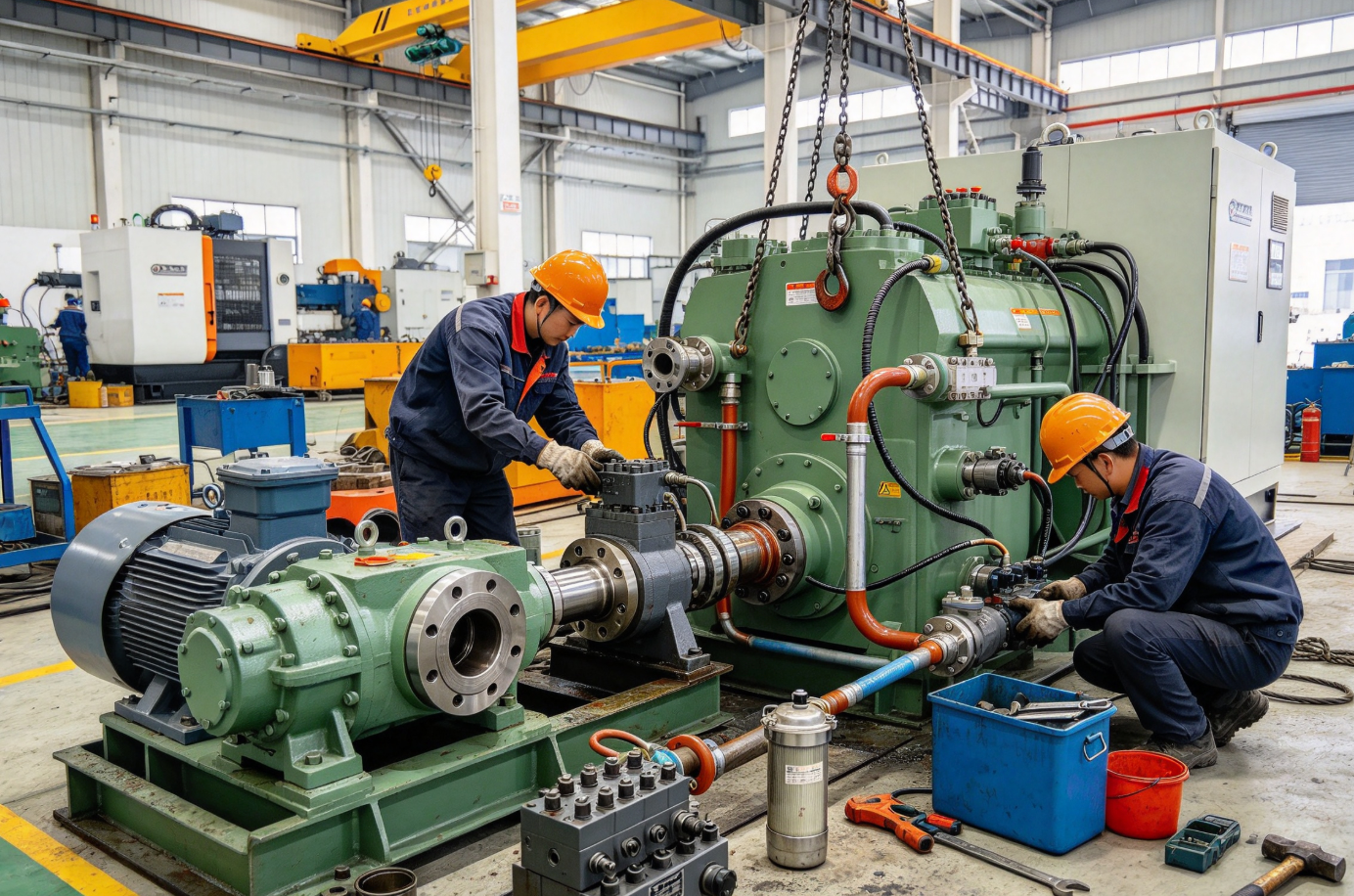
2. Core Hydraulic Equipment for a New Garage
Hydraulic floor jacks for routine vehicle lifting
A hydraulic floor jack is usually the most practical primary lifting tool for a repair bay because its low profile and rolling chassis support mobile work. It is especially useful for tire, brake, suspension, and inspection jobs where the technician needs to position the jack under an approved lifting point.
Low-profile vehicles require particular attention to minimum entry height, not just maximum rated load. A jack that can lift a heavy vehicle may still be unsuitable if it cannot fit beneath the vehicle. Buyers should record the lowest vehicle clearance in their service mix, verify the jack’s minimum height, and confirm that the lifting range reaches the required service position.
Bottle jacks for compact vertical lifting
A hydraulic bottle jack is best suited to vertical lifting where compact storage and portability are more important than rolling access. It can be useful for roadside kits, dedicated lifting points, and applications where a floor jack cannot be positioned effectively.
Its narrow footprint also creates a planning limitation: stability depends strongly on a firm, level surface and correct placement. A bottle jack should be used only at approved lifting points and paired with correctly positioned support stands before extended work begins.
Jack stands for safe support
Jack stands are support devices, not lifting devices. After a vehicle is raised, the load should be transferred to appropriately rated stands placed at approved support points before a technician works underneath it.
This distinction is central to a safe garage procedure. A hydraulic jack can lose pressure, move, or become displaced; a support stand is designed to hold a stationary load. The purchasing checklist should therefore treat lifting capacity, stand capacity, height range, base stability, and locking method as separate criteria.
Transmission jacks for drivetrain removal
A transmission jack improves control when removing or installing a transmission, transfer case, or other heavy component located beneath a vehicle. The equipment list from SVI International includes a transmission jack among essential shop equipment, which reflects its role in reducing improvised handling during drivetrain work.
Choose a model according to the component shape, access height, saddle adjustment, wheel movement, and restraint features. If transmission service is infrequent, a lower-cost model may be adequate only if it still meets the required load, stability, and adjustment criteria.
Hydraulic presses for controlled force
A hydraulic press applies concentrated force for tasks such as bearing, bushing, pin, and component work when the part and tooling are correctly aligned. It should be treated as a complete system consisting of the frame, ram, bed height, tooling, guards, and workholding method.
Press selection should follow the parts you actually service. A larger nominal rating does not compensate for poor alignment, unsuitable adapters, or an unstable workpiece. Include press plates, compatible punches, protective barriers, and a procedure for checking whether the component can safely tolerate the applied force.
Hydraulic cranes, pullers, and specialty tools
Engine cranes and hydraulic hoisting systems become important when the shop removes engines or other large assemblies. Hydraulic pullers and nut splitters can shorten difficult removal tasks, but they should be purchased after the shop has identified recurring jobs and compatible component sizes.
The automotive hydraulic equipment overview from FMPTE separates lifting, jacking, hoisting, and pulling equipment into distinct application groups. That distinction is useful: a jack raises a vehicle, a crane moves an assembly, a press applies axial force, and a puller removes a fitted component. One tool should not be substituted for another simply because both use hydraulics.
3. A Phased Purchasing Plan
A phased plan protects cash flow while ensuring that the first bay can operate safely. Buy the equipment that supports the highest-frequency services first, then add specialist tools as demand becomes measurable.
- Phase one: establish safe lifting. Purchase the primary floor jack, suitable support stands, wheel chocks, lifting accessories, and basic inspection and maintenance supplies.
- Phase two: support common services. Add a transmission jack if drivetrain work is part of the service menu, then add a hydraulic press when pressing tasks occur often enough to justify dedicated equipment.
- Phase three: improve throughput. Consider pneumatic-hydraulic jacks, additional mobile jacks, engine cranes, tire equipment, or alignment equipment when bay turnover becomes the limiting factor.
- Phase four: add specialty capability. Select pullers, nut splitters, and other hydraulic tools based on documented repair demand rather than occasional speculation.
The reference list published by SVI International places hydraulic presses alongside tire changers, transmission jacks, wheel alignment machines, and hand tools. This supports a broader view of garage equipment: hydraulic tools work best when integrated with tire, diagnostic, storage, and technician workflow decisions.
4. Compare Equipment by Measurable Criteria
Product comparison should convert marketing language into values that technicians can verify. Record every model’s published load rating, minimum height, maximum height, operating method, warranty terms, and replacement-part availability before approval.
| Specification field | What to record | Minimum comparison count | Decision question |
|---|---|---|---|
| Rated load | Manufacturer-published capacity | 2 models | Does the rating suit the heaviest intended application? |
| Minimum height | Manufacturer-published entry height | 2 models | Can it reach the lowest vehicle in the service mix? |
| Maximum height | Manufacturer-published lifting or support height | 2 models | Does it provide useful working clearance? |
| Operating method | Manual, pneumatic-hydraulic, or other stated method | 2 models | Does the speed and effort suit daily workflow? |
| Documentation | Manual, warnings, parts, and warranty | 2 models | Can technicians use and maintain it consistently? |
The numerical comparison counts above are an internal buying discipline rather than a performance claim. Comparing at least two candidates for each core item helps expose unsuitable minimum heights, missing documentation, and hidden maintenance constraints.
5. Safety, Maintenance, and Workflow Controls
Safety depends on the process around the equipment as much as on the equipment itself. The shop should mark approved lifting and support points, keep floors clear, prohibit work beneath unsupported vehicles, and train every technician to follow the same sequence.
- Inspect hydraulic oil, hoses, seals, wheels, pins, saddles, and locking mechanisms before use.
- Confirm the load is centered and the lifting surface is firm and level.
- Use the manufacturer’s specified lifting points and never exceed the published rating.
- Install support stands before entering the working area beneath a raised vehicle.
- Lower equipment under control and keep hands clear of pinch points.
- Remove damaged equipment from service until it has been inspected and repaired.
An overload safety valve is an important protective feature because it limits the risk associated with exceeding the rated load, but it is not permission to overload a jack or press. Operators still need correct positioning, inspection, and load control.
Workflow design also affects productivity. Keep frequently used jacks near the relevant bay, provide a defined storage position for stands, and maintain clear travel paths for cranes and transmission jacks. The equipment guide from TMG Industrial describes hydraulic lifts as essential for undercarriage access, illustrating why lifting capability directly influences repair workflow.
6. Buying for Export or Multi-Bay Operations
Export buyers should evaluate the complete delivery package, not only the steel frame and hydraulic cylinder. Confirm the required conformity marks, quality-system documentation, destination-market requirements, packaging standard, instruction-language options, spare parts, and after-sales process.
Standardized SKUs make dealer stocking, product listing, repeat ordering, and content marketing easier. A coherent range can include compact bottle jacks, low-entry floor jacks, workshop floor jacks, stands, transmission jacks, and presses, provided each product has clearly separated application limits.
Documentation should state intended use, capacity, minimum height, maximum height, operating method, inspection requirements, and prohibited uses. This information supports safer purchasing decisions and gives distributors material for accurate product pages and training content.
Frequently Asked Questions
1. What hydraulic equipment should a new auto repair shop buy first?
Start with a suitable floor jack, correctly rated jack stands, wheel chocks, and basic inspection supplies. Add a transmission jack or press early when drivetrain or pressing work is part of the planned service mix.
2. Is a bottle jack suitable for a repair shop?
Yes, when vertical lifting, compact storage, and portability match the application. It is not automatically the best choice for low vehicles or frequent repositioning, where a low-profile rolling jack may be more practical.
3. Is a hydraulic floor jack suitable for low-profile vehicles?
It can be, but the minimum entry height must be verified first. Low-profile vehicles require a jack that physically fits beneath the approved lifting point while still providing the required lifting range.
4. Can jack stands replace a vehicle lift?
Jack stands can support a raised vehicle for appropriate repair work, but they do not provide the access, speed, or full-vehicle capability of a dedicated lift. Use them only as specified by the manufacturer and vehicle service procedure.
5. Does a larger capacity always mean a better hydraulic jack?
No. Capacity is only one selection factor. Minimum height, maximum height, stability, mobility, operating effort, serviceability, and compatibility with the work area may be more important for a particular shop.
6. When should a shop buy a pneumatic-hydraulic jack?
Consider one when repeated lifting tasks make manual operation slow or tiring and the shop has a suitable compressed-air supply. Confirm the manufacturer’s operating requirements before purchase.
7. How should hydraulic equipment be maintained?
Follow the manual for fluid checks, lubrication, inspection, storage, and replacement parts. Inspect seals, hoses, wheels, pins, saddles, and safety mechanisms regularly, and remove damaged equipment from service.
Company Perspective and Next Step
Winray serves buyers evaluating hydraulic workshop equipment for automotive and garage applications. A suitable supplier should be able to discuss product selection, application limits, export documentation, packaging, language-specific manuals, quality procedures, and stable delivery. Before requesting a quotation, prepare your vehicle mix, service frequency, required specifications, destination-market requirements, and preferred SKU structure so the comparison is based on verified operating needs.
Use this checklist to turn your first equipment purchase into a safe, scalable workshop system: define the jobs, measure the vehicle clearances, compare published specifications, confirm documentation, and train technicians before commissioning each tool.

Jeannie
Zhejiang Winray Digital Tech Co., Ltd. — a professional hydraulic jack manufacturer established in 2003 and located in Haiyan County, Zhejiang Province. The team specializes in writing practical, buyer-focused guides on hydraulic bottle jacks, floor jacks, trolley jacks, jack stands, and automotive workshop equipment.
Post time: Nov-04-2026