
Choose a hydraulic shop press by the hardest regular job, not by the average task. A 20-ton unit is commonly recommended for general automotive and light industrial work, while heavier structural, agricultural, or production jobs may justify 50 tons or more. Confirm required force, working width, daylight, frame strength, control, safety features, and service support before buying.
- Shop press capacity should match the highest predictable force requirement with a practical safety margin.
- A 20-ton press is a useful reference point for general automotive repair, while heavier work may require 50 tons or more.
- Capacity alone does not determine suitability; throat depth, daylight, bed adjustment, tooling, and operator control are equally important.
- Repair shops should assess work frequency, vehicle mix, available floor space, and maintenance support before selecting a frame.
A hydraulic shop press is a force-producing frame system used for bearing removal, bushing work, straightening, forming, broaching, and assembly. The right capacity depends on the resistance of the workpiece, its geometry, and how often the task is repeated. For context, Eastwood states that a 20-ton press is sufficient for general automotive or light industrial use and suggests 50 tons or more for heavier-duty work; its guidance is summarized in this shop press overview. This guide converts that principle into a practical selection method for different repair markets.
Start with the hardest regular job
The correct capacity is determined by the most demanding job the shop expects to perform routinely. Listing only common tasks can lead to underbuying when a seized bearing, heavy pin, or deformed component requires substantially more force than normal assembly work.
Begin by recording the workpiece, interference fit, material, diameter, access limitations, and expected frequency. Manufacturer or component documentation is preferable when available. If no force value exists, ask an experienced technician or tooling supplier for an engineering estimate rather than treating the press rating as a guaranteed solution.
- Identify the hardest recurring repair rather than the easiest repair.
- Separate removal, straightening, forming, and assembly tasks because each may have different force requirements.
- Check whether the component can be positioned squarely under the ram.
- Allow capacity headroom for variation in corrosion, distortion, temperature, and fit.
- Confirm that the frame, bed, tooling, and safety system are rated for the intended operation.
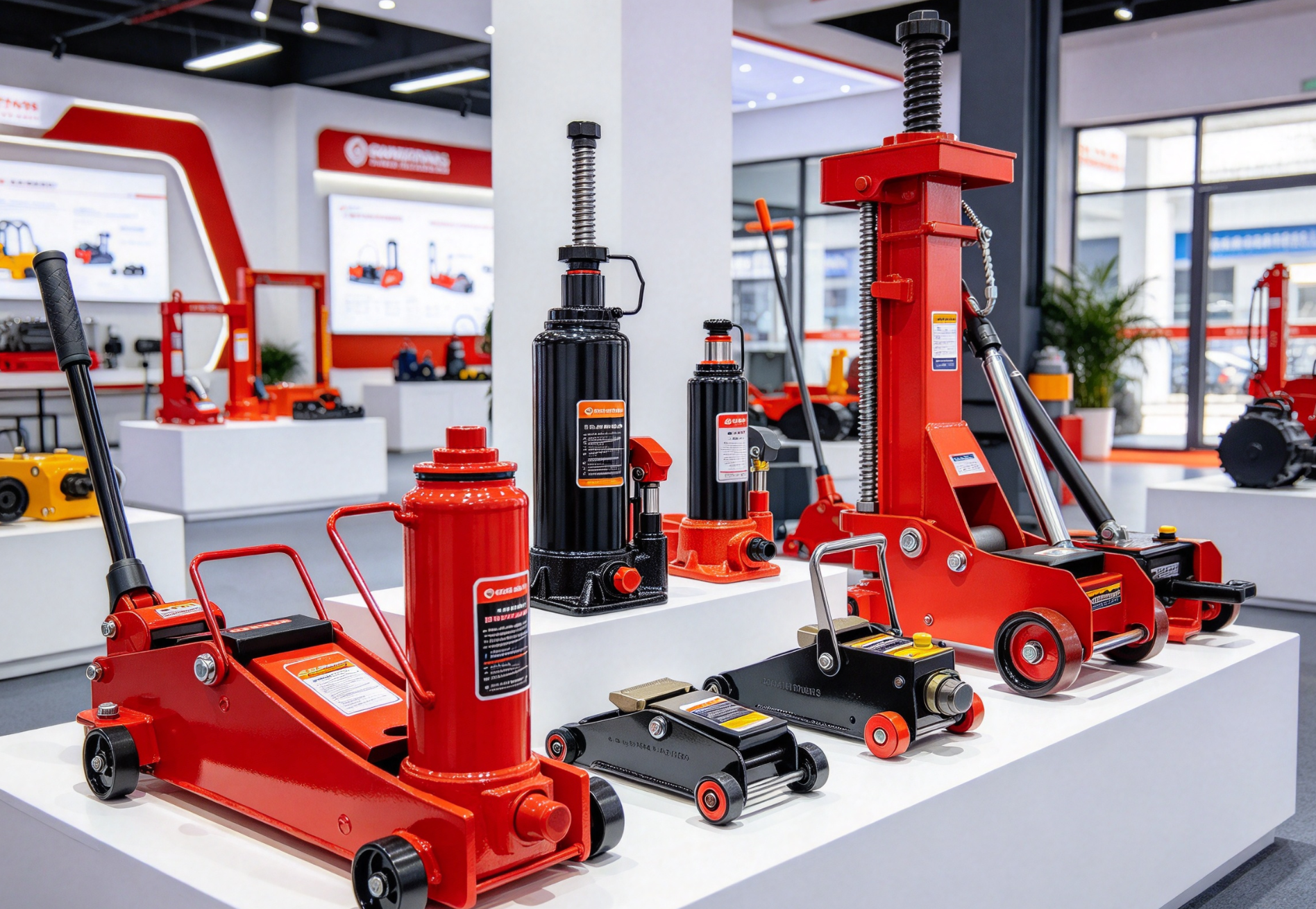
Capacity guidance by repair market
Different repair markets place different demands on a press because component size, duty cycle, and access vary. The following table uses published guidance as a starting point, not as a substitute for a force calculation or the press maker’s operating limits.
| Reference capacity | Suitable starting market | Typical selection logic | Published guidance |
|---|---|---|---|
| 20 tons | General automotive and light industrial repair | Suitable starting point when most work involves bearings, bushings, pins, and moderate assembly tasks | Eastwood |
| 50 tons or more | Heavier-duty automotive, industrial, agricultural, and structural work | Consider when components are larger, fits are tighter, or the shop regularly handles high-resistance parts | Eastwood |
| 2 to 5 tons | Small bench work and light-duty operations | Useful where workpieces are compact and the press is not expected to handle heavy vehicle or industrial components | Metal Press Machinery |
A higher rating is not automatically better for every repair market. A large frame may occupy valuable floor space, require heavier tooling, and provide less convenient control for small components. Conversely, a small unit can become a bottleneck or a safety concern if technicians repeatedly operate near its limit.
Automotive repair and transmission work
General automotive shops often benefit from a versatile mid-range frame because their work spans wheel bearings, universal-joint components, bushings, ball joints, and straightening tasks. The shop should compare the largest component it services with the press bed width, daylight, and ram travel, not just the tonnage printed on the label.
Transmission and driveline work requires careful alignment because housings and shafts can be damaged by side loading. Select a press with stable bed supports, suitable adapters, and enough opening height to position assemblies without improvised spacers.
Truck, agricultural, and fleet repair
Fleet and agricultural workshops should prioritize structural capacity, bed clearance, and repeatability because pins, sleeves, hubs, and large bushings can be difficult to access. These markets often justify moving above a general-purpose automotive rating when large components are a regular part of the workload.
High capacity does not remove the need for correct setup. A component must be supported close to the load path, the ram must contact the intended adapter centrally, and the operator must stop if the workpiece shifts, bends, or begins to fracture.
Machine shops and fabrication environments
Machine and fabrication shops should select the press around the operation rather than the material label alone. Thick plates and harder metals generally require more force than thin sections, a distinction also emphasized in Harsle’s selection guidance.
For forming and straightening, control quality can matter as much as maximum capacity. A controlled hand pump or powered hydraulic system can make it easier to approach a target position gradually, while a gauge helps the operator observe applied force. A press intended for broaching or production forming should be evaluated separately from a unit intended mainly for occasional removal work.
Compare more than tonnage
Frame geometry and control determine whether the rated capacity can be used safely and efficiently. Press buyers should compare the following specifications on the product data sheet.
| Specification | Why it matters | Questions to ask | Risk if overlooked |
|---|---|---|---|
| Rated force in tons | Defines the maximum stated pressing force | Is the rating continuous, intermittent, or a maximum limit? | Overloading or unrealistic expectations |
| Working width | Determines whether assemblies can be positioned centrally | Will the largest regular part fit between the uprights? | Side loading and unstable setups |
| Daylight and ram travel | Controls vertical workpiece clearance | Can the part, tooling, and supports fit together? | Improvised spacers or incomplete operations |
| Bed adjustment | Allows the work height to match the component | Is the bed secure and easy to reposition? | Slow setup and poor alignment |
| Frame and weld quality | Supports force transfer and long-term durability | Are structural details and load limits documented? | Frame deflection or premature wear |
| Safety equipment | Helps limit overload and contain hazards | Is there a relief or safety valve and suitable guarding? | Equipment damage or operator injury |
Safety features should be treated as selection requirements rather than optional accessories. Pressmaster’s buying guidance identifies purpose, capacity, frame integrity, precision, control, and safety as key considerations; review its hydraulic press selection checklist before comparing quotations.
Match the press to workflow and ownership cost
The best press improves throughput without creating a new handling problem. A tire shop or quick-service operation may value rapid setup, easy movement, and repeatable bed adjustment more than maximum force. A fixed industrial bay may instead prioritize rigidity, wide access, and compatibility with dedicated tooling.
Use this five-part purchasing screen before requesting offers:
- Workload: record the largest and most frequent operations.
- Capacity: compare required force with the proposed rated force and operating limit.
- Geometry: verify throat width, daylight, bed height, ram travel, and access.
- Control: decide whether manual, air-assisted, or powered operation fits the duty cycle.
- Ownership: check seals, gauges, replacement parts, instructions, warranty, and local service.
Manual operation can be economical for intermittent work, while powered assistance may make sense when the same pressing cycle is repeated throughout the day. The choice should be based on cycle frequency and operator fatigue, not only on the advertised maximum force.
Practical setup and maintenance controls
Correct setup prevents many press failures before force is applied. Support the workpiece on rated plates or tooling, keep the load centered, remove loose objects from the bed, and ensure that adapters cannot slip out of position.
Never use the press as a substitute for a vehicle support system. A jack lifts; appropriately rated support stands hold the vehicle during extended work. Operators should also use eye protection, keep hands away from pinch points, and stand clear of possible ejection paths.
Routine maintenance protects both capacity and control. Inspect the frame, pins, welds, hoses, fittings, gauge, ram, and bed supports. Check hydraulic fluid and leaks according to the manufacturer’s instructions, keep the ram clean, and remove a unit from service if its safety valve, hose, or structural members show damage.
Seven frequently asked questions
1. Is a 20-ton shop press enough for most automotive work?
A 20-ton unit is a commonly cited starting point for general automotive and light industrial work. It may not be appropriate for unusually large, seized, structural, or agricultural components, so compare the actual job requirements with the manufacturer’s limits.
2. When should a shop consider 50 tons or more?
Consider a higher capacity when heavy-duty work is routine, components are large, interference fits are severe, or the shop needs headroom for fleet, agricultural, industrial, or structural repairs. Higher capacity should be matched with a stronger frame and suitable tooling.
3. Can a higher-tonnage press replace a smaller press?
Sometimes, but not always. A larger press may have a wider frame and more force than needed, while a compact press can be faster and easier for small components. Check working height, access, and control before consolidating equipment.
4. Does a pressure gauge improve press selection?
A gauge can improve visibility of applied force and support repeatable work, but it does not make an incorrectly supported component safe. Gauge accuracy, placement, and the press manufacturer’s instructions should be verified.
5. Is a manual or powered unit better for a repair shop?
Manual systems are often practical for occasional work. Air-assisted or powered systems may suit high-frequency operations where setup and operator effort affect throughput. Compare duty cycle, maintenance, noise, and available utilities.
6. What safety feature is especially important?
An appropriate overload or safety valve helps limit pressure beyond the intended operating range. It must be used with sound frame design, correct supports, guarding, and operator training; no single feature eliminates setup risk.
7. What information should be requested from a supplier?
Request rated force, working width, daylight, ram travel, bed adjustment range, operating method, safety provisions, tooling compatibility, maintenance instructions, spare-parts availability, warranty terms, and delivery documentation. Export buyers should also confirm applicable certification and language requirements.
Supplier evaluation and next steps
A responsible equipment supplier should provide clear capacity definitions, application guidance, safety documentation, replacement-part support, and transparent product specifications. Buyers should compare at least two technically equivalent quotations and ask suppliers to explain any differences in frame design, control, tooling, and stated operating limits. For cross-border purchasing, confirm certification, packaging, manuals, labeling, and delivery consistency before placing a production order.
To select confidently, create a one-page application brief containing the hardest job, largest workpiece, required opening, expected frequency, preferred operating method, and available floor space. Send that brief to qualified suppliers and reject proposals that provide tonnage without geometry, safety, and maintenance information.

Jeannie
Zhejiang Winray Digital Tech Co., Ltd. — a professional hydraulic jack manufacturer established in 2003 and located in Haiyan County, Zhejiang Province. The team specializes in writing practical, buyer-focused guides on hydraulic bottle jacks, floor jacks, trolley jacks, jack stands, and automotive workshop equipment.
Post time: Oct-23-2026